My name is Melissa Denning. I am a parenting educator and early childhood teacher. I started this blog as a way share thoughts and resources with parents and caregivers. I hope this is a space to encourage one another in the role of parenting. My hope is that this can be a safe space for those with young children to connect. I hope you are able to read, reflect and share your experiences with one another. Enjoy!
I haven't ever thought of my self as an artist in the sense of extravagant paintings or drawings. In fact, art has not been on my radar. When I try to draw something I typically find a great step by step visual to refer to and even then the proportions are off and the drawing is not to scale. I can create and excellent dog using these steps but in real life the dogs head would be so large it would never be able to walk. HA! Give it a try and see how you do.
Is that what an artist is? Creating a master drawing using step by step instructions or a visual in your mind? Could it be abstract art like the photo above? Is it creating a beautiful image to hang in a business or home or is there more to art? I haven't given in much thought.
Is teaching an art?
Am I an artist?
Wow, I haven't ever thought about it, I might be!
After looking at Saint Francis of Assisi's quote above I wanted to dive in a little deeper to each aspect that was mentioned. Let's break it down.
Teaching with my hands.
There are many times I am using my hands throughout my teaching day. I work with young children, parents and with my co-workers. I like to jump in wherever I am needed. I enjoy taking on new tasks and joining committees that support the families I work with. If I can lend a hand to get the job done, I typically will. I like to think that many hands make for light work, if we all do our part we can have a large impact on our community.
Teaching with my head.
My head is always full of thoughts and ideas. I learned one of my strengths on the Clifton Strengths Finder is Input. Input is storing of information, collecting data, resources, dates and such. Before taking the strengths finder I didn't know why I could remember all kinds of facts and details about article, conversations, or families and children in our community. After realizing this is a strength I have been more aware of how my head can enhance relationships I make with families in our community by remembering details to make connections. It also helps me to recall information in teaching to include resources or child development milestones.
I recognize that although I can name the information a weakness I have is recalling the exact source. A wise man once told me, a great student or teacher does not have all the answers but the ability to find answers to create new learning. I hold onto that not only as a teacher but also as a parent. If my children are not great at fill in the bubble tests, is that okay? Isn't in more important that they can own the information, find the resources they need and investigate life? When in life will a fill in the bubble test or reciting facts play a part in being a part of a team? If they join the Navy or need to collaborate with a team on a construction site is a scantron timed test going to help them?
Using your head is a part of becoming a craftsman or an artist. Using your head leads to new thinking and learning.
Teaching with my heart! 💓
This is where my passion comes out. My heart and my passion are the center of my teaching. I get excited and energized when I am with children and parents. I wear my heart on my sleeve. When a parent is hurting, I am hurting. When a parent expresses joy and excitement I can share that with them. If a parent is in pain I feel it deep in my soul and bring that home with me.
When a child meets a milestone I jump for joy. I share tears of joy if a child with developmental delays meets their next individual goal. I live, breathe and crave these shared experiences with parents. They are joyful, painful, exciting, frustrating, happy, sad and everything in-between. I can only hope and pray that the parents in early childhood know my heart is with them and that they can come to me at anytime with anything.
Does this make me an artist?
Teaching with my hands, head and heart is something I strive for on a daily basis. When I look at a painting or work of art I can often feel the emotions the artist might be trying to portray. The artist used their hands to create, their head to imagine and their hearts to express.
When I am teaching do I do the same? I guess that is a question for the students in my parenting education classes to answer and not for me. I do hope that they see and feel my passion and my commitment to their families from day one until the end. I have told families I am there for them now and forever, I just hope they feel it in their hearts today and as they move into the K-12 schools.
Am I an artist? I am not sure, but I am on the right track!
We have always had leaders in our lives. At times we are the leader and other times we have a leader we look up to. Is there such thing as a good leader and a bad leader? I think so and maybe you do as well. Leaders have all kinds of traits that live within them. Sometimes a specific trait shines more than another.
What do you look for in a good leader? I tend to look for a leader that has great communication skills, is focused on getting the job done and allows for mistakes along the way. In addition, I feel it is important for a leader to admit when things might not be going as planned and listen to others while maintaining a results focused vision. Trust is a word that comes to mind. Will a leader trust the group they are leading in admitting mistakes and changing the course as needed.
I also feel that energy is a trait that I look for in a leader. Is this person able to energize the group and does their passion shine in the work they are doing.
On the flip side, I have been under some terrible leadership as well. This is evident when there is room for gossip, a leader allows for his or her mistakes to be covered up, they can do no wrong and seem to have a bit of blaming or shaming inside them. Sometimes a poor leader will make decisions and demand action without an explanation as to why or what the end result is. Relationships with a team are not a strong and trust is not obtained.
I can give an example of leaders I have had in my life that fall into both categories. If we made a column for the good and the bad I could list them by name and how they fall into my life in different positions I have been in. That also feels wrong. Did some of these leaders have more training than others? Where are their hearts? I feel your heart leads you in many situations.
I also feel that the way I feel about leaders personally impacts which category I would place them into. Before I knew what I looked for in a leader I used my feelings to categorize leaders. As I have gotten older and placed in many different situations I have started to use logic to identify a good leader. Is this a person that is able to learn and grow or is this a person that will always do what they have always done expecting different results? I think a strong leader has traits of showing love and establishing relationships. I believe they need to be energized by the work they do and have passion to drive their goals. I also feel like they need to be honest and trust worthy. Does this person do what they say they will do or what people want to hear?
If we always do what we have always done,
we will always be what we have always been.
How will you become a leader in your daily life and impact others with your love, energy, passion, honesty and bravery. To lead we must be brave. Begin brave involves taking risk and being a part of a team that will be supportive with those risks that are successful and those that might need to be adjusted.
I use to worry, A LOT! My mind would be filled with the what if this or what if that scenarios. Worrying would cause me to miss out on so many adventures that life provided. I thought everyone worried. Why wouldn't they? Isn't everyone wired the same?
Worrying was a part of my childhood. I do not believe I was born to worry, I believe I was taught to worry. Anything that we did as children I would hear my mother in the background saying all the things that might go wrong. She spoke her worry aloud to us. I believe this is why so many of her anxieties limited my childhood and likely early adult life.
It wasn't until I was a young adult that I realized not everyone was afraid a dog might bite them. In fact, many children walk up to dogs and are excited to pet them. Not me, my mom would hold us tight and say "you never know if that dog will bite you" and we would walk away. I also thought every parent made you go inside and shut the doors when someone was mowing lawn. Didn't everyone do that? No, not really. She did this because when she was a child a rock flew out of the lawn mower and broke her arm. Which means, of course, that freak accident would likely happen to us. The list continues: tubing behind a boat, swimming in a lake, driving a little too fast in a boat, standing to close to a fire, climbing a tree a little too high, riding our bikes around the neighborhood out of her eye site and a tree falling on our house if the wind is too strong in a storm. This fear extended to having a babysitter! Yes, we never had a babysitter our entire childhood because she didn't trust anyone to watch us besides our grandparents. WOW!
As a young adult I realized how much time I spend worrying about what might happen. It took me a considerable amount of time searching my soul to find out if it was worth worrying about and if I had any control over the outcome. I realized that I was giving all of my attention to things I had not control over. I couldn't predict the outcome or the future. Why was I letting the fear of the unknown control how I was feeling. What would happen if I let go of the worry and started to focus my attention on all of the ways things could turn out for the positive? I had to overcome this negative thought process and rewire my thinking.
Music, quotes, bible studies and journaling are all ways that I have found to rewire my thinking and focus my attention on a desired outcome. It is less of a battle now that I have had years of practicing and retraining my brain. However, having three very energetic and risk taking boys in my home I need to be conscious of the words that come out of my mouth. I need to give attention to what might go right and how they might succeed instead of hearing my mothers words come out of my mouth when they explore the world.
I see my boys riding wheelies on dirt bikes, climbing to the top of trees and saying look at me, jumping off the boat in the middle of the lake, riding a bike with no hands on the handle bars, jumping off my deck since the stairs take too long, climbing on the outside of a tunnel tube at the park and the list is endless. They are being children. They are embracing their natural curiosity of the world around them without my mind shaping their experiences. Do I have to walk away at times? Of course I do. I would rather walk away and let them continue their adventure instead of sharing my facial expressions, gasps or words of concern. When grandma is around she might try to place her worry into their minds and I simply say "they do it successfully so why would I stop them." She is embracing some of their activities and walking away from others. She still feels the need to tell me all the things that could go wrong in any activity they are doing. My response is always "I can't worry about something I don't have control over."
Simply stated I have to give my time and attention to all of their interests and pray often. I pray for God to keep them safe and guide their decisions. I also pray for faith over fear and blast Fear is a Liar when my mind starts to travel to my childhood.
We can all choose what we give attention to.
We can give attention to the worry or to wonder.
Where will you place your attention?
You only have one today, it is yours.
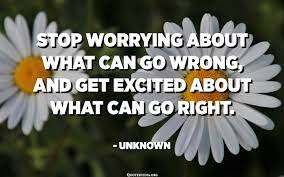
Will you worry about what might go wrong, or get excited about what CAN go right?
Check out the article below from 1998, the year I graduated high school. Yes, this article is over twenty years old and we are still discussing ways to reinvent schools. How can this be?
It was not apparent to me in 1998 that schools needed to be reinvented or that there was anything to reinvent. I was an average students, getting my school work completed, working part time, enjoying time with friends and family while living my best life. I didn't know what was taking place within the schools because I was a student that followed the "educational path" check these items off your list, graduate and head off to a 4 year college. Isn't that what I was suppose to do? Of course, every teacher I had said things like, you need this for college or get this score to be accepted into that school etc. I did what I was told and always knew I wanted to be a teacher.
Now as a parent of three boys I can tell you that I have learned so much about the way schools need to rethink how they prep students for ALL areas of life after high school. It was eye opening the day my oldest said "all they talk about is college but I want to go into the Navy" and yet a year later he said "what about the kids in my class that want to go into the trades like their dads or open a small business" both of which were eye opening for me. However, as I look around me almost every friend he has belongs to a family in which one of the parents went into the trades and makes more money without college debt than those around them. Wow! My son saw that the schools are not tapping into every child's path but only the path of students that wish to attend a 4 year college.
The article above stated that we sort out the small percentage of students ready for further learning, professional and managerial jobs while leaving the remainder of the students unprepared for labor, assembly work (and I would add on military) options. Which completelyecho's my sons experience from 2016 to the present day entering his sophomore year. I also think about students that will choose to be a stay at home parent, own their own business and many other options. We cannot teach to ALL students successfully if we are leaving out a significant portion of students by the narrow vision of one path for all.
As a part of our leadership team within our district I try to speak up for the students that are not status quo. When conversations are spinning on college ready students I try to speak up for college or career ready students. Our strategic plan that was put into place has specific language that speaks for all students and their path. I find it more impactful when I can quote the strategic plan and goals our district has printed vs sharing the personal stories of my own children. However, at times it is necessary to share how children feel when they are in a classroom or building and the conversations revolve around college only as an option.
How can we as parents in our community speak up for ALL children like or mission statement or strategic plan? They are all, ALL of our children. This discussion has been taking place well before 1998. The article above states many ideas for reinventing our schools to meet the needs of all students. This discussion is not new. Where have we come? Where will be go? These are all questions I have in my mind. To know that these discussions took place when I was in high school and are still taking place shows that change is a slow process. Is talk cheap or are we going to do something about it?
My freshman year in college, I had an instructor that gave us a blank spreadsheet. Along the left side was every time of the day broken into 15 min segments. Across the top was each day of the week. Our task was to write down every single thing that we did every 15 minutes of every day of the week.
Everything!
I began by blocking off my sleeping hours, that seemed to be the easiest. Then, I added in: showers, brushing teeth, meals and other routine items. In college, I was working part time as a bartender in Canal Park (Duluth, MN) and the hours fluctuated. I placed them the best that I could knowing it wouldn't be perfect. Next, I added class times for the courses I was taking and travel time to and from. That was it, I stopped writing things in. I was stuck, what else did I add? What do I do? The instructor came over and helped me process. She asked questions like: do you watch any television shows regularly? Spend time with friends? What hobbies might you include?
I continued working and added more items: taking a walk, reading a book, watching Greys Anatomy and Desperate Housewives, happy hour with friends, talking on the phone to my parents, taking a nap before work, playing cards etc.
Once we had our sheets complete the instructor told us all to find 15-20 hours of time to block off for studying. All you could hear was gasps from the room. People began saying "I don't have that many empty blocks of time" and "that isn't possible" or "how could I do that when my days are full?" The instructor allowed for this processing time. She took in every look of horror on the faces of these very young twentyish year old students while telling us to continue to work on it. Then she said... you might have to give something up. What?! Give something up? As you can imagine the world has seemly revolved around most of us as we grew up. Our parents changed their schedules to join our sporting events, we planned family vacations around part time jobs of the teens and we went home from college on our breaks not when our parents wanted us to. Now, this instructor was asking us to give something up to study. HA!
The class worked on this for what seemed like hours. The instructor then said to us as a class "In order to fully succeed at this University you will have to make adaptations to your current life. That means you will have to cross some of the items on your sheet out in order to make time for this new learning. Once you decide what you might need to change or eliminate in your weekly schedule you must change the words to STUDY. The word study must be in bold and all capital letters. This word should be written in sharpie so you do not erase the word and change it to something else."
Of course the class discussion went on, reality hit and life was not going to go on as it once was for most of us. Fast-forward to 2020 when in the middle of a pandemic I decided that I would register for a Masters Program through Saint Mary's University. Not only in the middle of a pandemic, but also as a mother of three very active boys ages 10, 12 and 15, while working full time and being a wife to my amazing husband.
Before registering we had a family meeting. We discussed as a family we would need to decide if I would be registering for my Masters Program. I could not make this decision alone. In the back of my head I was working through the spreadsheet, just as I did as a freshman in college. Only this time I was noticing that from the age of 19 to the age of 39 the empty cells in my spreadsheet were few and far between. I had cells filled with sports, birthday parties, carpool, helping my children with homework, making lunches and packing backpacks, spending time with my children, date night with my husband, family vacations, girls nights, work, taking care of our parents, drivers education and all of lives events that just pop up in between.
I didn't need to explain the activity above to my family. What we needed to discuss as a family was that we are a team. Our team would have to make adaptations in order for this to work. We all needed to be on the same page about what this would look like and how it will impact every single one of us.
I listed my adaptations and expectations to my family. I would need to get up early to work on my school work before they all woke up. This is my best thinking time and a time that would be the least disruptive to our family. On the flip side my boys needed to know that at times I would need to rely on them to pick up in areas I might not be able to. I explained to them that I might be getting up early to do my work but I still needed sleep. Moms bedtime changed. It went from me putting my boys to bed when they were young to my oldest tucking me in to bed at night. Wow, how the tables have turned. I explained that I want them to have the least impact when it comes to summer fun, getting to and from sports or spending time with friends and family. In order to do that we all needed to step it up and pitch in when asked. At this time in my life I have never been more thankful that my boys have been a part of the dinner making process. One really tough day a few weeks ago my husband and I came home to smoked ribs fresh off the smoker. Talk about a surprise. It was on that day that I realized we are all adapting and we will be okay!
Reflecting back upon my freshman year of college, it was rather simple to cross off Greys Anatomy and Desperate House Wives or cancel a Friday night game of cards. It was just me. I could adapt to reach my end goal, graduation. Now, with a family of five and a full time career, it takes a little more intentionality and open communication. I am thankful that we had a family meeting prior and came up with a few ground rules to support this process. I believe that I didn't need to bust out a spreadsheet for my pre-teen children but rather that they are seeing our family work and adapt to the time we have and the tasks that need to be accomplished by all of us. I believe that we are all learning life lessons and furthering our education in this process. My education might be formal and theirs might be life skills but in the end aren't they both important? It is my hope that my boys are at the age where they will remember this crazy time in our lives and use the skills when they have families of their own.
There have been many times that we have to make tough decisions about activities we might want to attend. It often leads to discussions on needs vs wants and what the domino effect might be. When this happens I catch myself singing the song below in my head. Music centers me. Music can speak what I might not be able to put into words. Adaptations and choices often feel like "do this, don't do that" which then leads to an evaluation of needs vs wants and in turn helps me (and our family) make decisions that will be best for all of us.
The best teacher that I ever had was my fourth grade teacher. This was my first experience with a male teacher which at the time was anxiety producing. The world of education back in the 80s and 90s was primarily female. The summer was spent being curious. What would he be like? Would he know how to teach? Would he have a loud disciplinary voice? Would our classroom be sitting in row silently listening to lectures? Of course, as a ten year old female child in elementary school, my assumptions were that he would be the complete opposite of every female teacher I had prior to me and I was right!
The first day of school I remember entering the classroom. He greeted each of us at the door, asked our name and then guessed our last name. He was doing pretty good until he realized that there were six Melissa's in his room. This was just the beginning of how right I was on this teaching being the complete opposite of every other teacher I had prior to fourth grade. From there we spent weeks getting to know one another and the expectations of the classroom. We didn't sit in rows silently nor was our classroom still. The movement and talking aloud in the classroom was freeing. Often times it didn't even feel like school but rather a community gathering of same aged peers. The engagement and relationship building in this class was memorable. Not only did he have the unorthodox teaching behavior in means of classroom management, he also carried his own style into everything he did. He knew each student individually and set the next best goal for the student, not the grade. I can remember walking into the classroom and he looked right at me and said "Schibonski, you keep missing 7x7 on everything we do. I want you to go into the room and choose pushups or jumping jacks and say 7x7 is 49 ten times." I was in shock, how embarrassing! Except that when I entered the room every other classmate was doing the same thing with the math fact they missed. He knew which math fact each and every student needed work on. For the rest of the day during transitions he would say "find a space in the room and get busy with your math fact. You must say it ten times before you line up at the door." WOW!
Fast forward to today, as a teacher myself. I can recognize that he was doing things out of the ordinary. He was relational! Relationships mattered in his classroom not only teacher to student but also student to student. He owned his own strengths and challenges. I remember the big dictionary on his desk. If a student asked how to spell something he would day "I struggle in spelling but let's look it up together so we both can learn." after he would challenge the student to spell it verbally before he could. During transition times they would race to see who could spell that word correctly first. Imagine that: relationships and learning happening at one time. Not just learning, personalized learning!
My fourth grade teacher made each and every single student feel loved, cared for, known and important. He embarrassed individual strengths and struggles in a way that was not embarrassing or singling anyone out. The sense of community leads me to believe he had a strong belief in connection. He impacted my fourth grade year and my view on education from that year forward. The social emotional learning that I experienced in that community of fourth graders was something I was able to take with me for the rest of my K-12 journey. Now, as an educator, I can take these tidbits into my own teaching. I can embrace differences in children and parents I have in class. I realizes that the importance of listening, knowing people for who they are individually and remembering details of their life can impact relationships and that relationships are the first step before any learning can take place. I am pondering if the experience I had in fourth grade have shaped who I am as far as my strengths. One of my top five strengths is relator. This seems to be fitting as a relator seeks deep meaningful relationships with others. I am curious would I have relator in my top five strengths had I not had Mr. Bonine as my fourth grade teacher? I may never know, I can just be grateful for all that he did to make the fourth grade class the best around!
I am curious if there is a teacher you had in your educational career that may have had an impact on who you have become as an adult? In what ways might this teacher have impacted your view on education and relationships with others? I would love to hear from you in the comments or via email krismelissadenning@gmail.com
When people see me out of the house they are quick to think I am an extrovert. When I am teaching I can talk to anyone, start conversations and make people feel comfortable. I am a Relator according to Gallops Strengths finder survey. This means I want to build relationships with people that are long lasting friendships that are personal. I view people as people vs a student or co-worker. This also means that I seek deep, strong, long lasting relationships that involve commitment, trust and loyalty. This sounds very much like an extrovert.
However, I don't see myself as an extrovert. This might come as a shock to those of you that personally know me. When I think of an extrovert, I think of the people that talk to anyone and everyone. I think of the person that can enter an elevator and strike up a conversation, go to a wedding at sit at a table of strangers and talk about anything. An extrovert can go to work all day long then come home and be ready to socialize with people. They are ok with events that include the entire community or friends of friends. Extroverts are always looking for the next person to meet that can energize their soul and fuel their body and mind. That just isn't who I am.
I get fueled by being alone or having quiet time. I fuel myself by getting up two hours before my family so I can be ready to take on the day. This sets the stage for my entire day. If I have time to myself reading a book, catching up on school work, planning lesson, working out, drinking coffee and watching the birds at my feeders I can appear to be an extrovert through out the day and connect with people. When I am fueled I am able to strike up a conversation and use my Relator strength to build deep and strong relationships with the families I have in ECFE. If I take time alone I can better respond to the 50th time I hear "Mom!" from my children. This also means that at the end of the day my tank is empty. I need time to refuel and decompress. At the end of the day I also need about an hour alone to process through the day and reconnect with myself. You see introverts recharge by spending time alone or with a small group of people. After a full work week the last thing I want to do is go to a community event and talk to people. I am drained. I want to be at home with my family or with one other couple/family that I have a strong relationship with.
Recently I was able to watch a TED Talk by Susan Cain. She explains her experience of cherishing introverts and how in education and work settings we might be pushing against the need for extroverts with all of the collaboration and group work that is taking place. She offered perspective that I hadn't considered. Susan pointed out that we do not want to end collaboration and group work but rather make space for introverts to be who they are as well.
What might this mean in parent education or ECFE classes? For me it means that we (teachers and parents) need to advocate for our introverted children. The SHY children! Yes, I just said shy. You all know that I dislike that word and will correct parents, teachers and caregivers when they use that word to describe their toddler or preschooler. Your child will become SHY and define themselves as SHY if you use that word to describe them. Stop saying SHY! What if we replaced this with "She is observing the classroom before she decides what she would like to do." We could also say "He likes to warm up in my lap before talking to you." When we use the word shy we are deciding for that child that they will grow up to be shy and defining who they are to become. In reality, young children are learning to leave the nest so to speak. As infants they depended upon a parent or caretaker to meet their needs and keep them safe. When a child 2-5 years old enters a classroom setting with other adults and children sometimes they are unsure and need to have the comfort of the adult before knowing what to do next. This is not shy, this is child development. Now, some of you will ask "What about little Samantha that just walks right in and begins activities?" To that I say, What about her? No one said "Wow, look at Samantha she isn't shy." They just allowed Samantha to enter the room without a definition or label. Yet, the child that does not do this is "SHY!" What?! That does not make any sense to me.
Does this mean that Samantha will grow up to be an extrovert and the other child will be an introvert? At this age we are not sure. We are not able to label them, they have years to develop. We know that the brain grows at the most rapid pace from birth to age three. We also know that the brain continues to fire and wire frequently through age 8 and the brain is not fully developed until the mid to late twenties. What I do know is that we can label children shy, place them in a box of being defective if they are introverted while not saying a word about the extrovert in the room. We can try to force them to speak in large group settings, push peer interactions or group work but should we? As parents and educators shouldn't we meet the child where they are and support their path in development so they can become who they are mean to be?
Yes! The answer is YES! We can reword statements that are made about our children.
We can remove the words:
shy
naughty
bossy
antisocial
mean
tattletale
We can change them to statements like:
we are warming up to being at school today
we are having a hard time controlling our body at the moment
we like to be the leader
we enjoy delegating the tasks
we are working on learning about personal space
we aren't ready to talk yet, pass to the next student
we prefer to observe before we jump in to the task
we worry when others are not following the rules
If we reframe our thinking and reword our statements we can allow young children to grow and develop. This will not place them into a box of growing up to be shy, naughty or bossy. Instead, this will allow them to develop their personal space, ease into new situations at their own pace and filter the times it is necessary to tell an adult or allow the other child to make decisions on their own. It will also allow the adults to rethink the behavior. Is the child really naughty or are they telling you they are overstimulated?
I will continue to support parents and children in our ECFE classes. I will commit to not labeling a child as an introvert or extrovert while challenging parents to rephrase words or statements that define or could potentially define their child by rephrasing or supporting with evidence that their child in young and is developing into who they will become many years from now. I will also support teachers in my coaching role to embrace all children where they are and support spaces for group work and individual work within the classroom as Susan pointed out, the world needs both!